Immortal Americans

It’s been over two decades since the songwriter AUSTIN LUCAS packed his bags and left Bloomington, Indiana. The Midwestern town where he spent his childhood years falling in love with rock & roll, embracing his punk roots, and standing his ground whenever intolerant locals didn’t understand his way of life.

AUSTIN LUCAS returns to that place—both creatively and physically—with his seventh studio album, Immortal Americans. Written after a tumultuous period that found Lucas getting sober, supporting his partner through a battle with cancer, and breaking up with his longtime record label.  Immortal Americans is a clear-eyed album for murkier times, rooted in stripped-down heartland rock songs that find the artist reflecting upon the changes in both his hometown and himself.

Co-produced by Lucas and Will Johnson (Centro-matic) and recorded/engineered by Steve Albini. Captured in a series of live, full-band performances, Immortal Americans was written after Lucas resettled in Bloomington. He’d been away for years, touring the world as an independent solo artist before signing a record deal with New West in 2013. In many ways, the albums he released during that period were reflections of the music he’d grown up with. From the mountain music of his father (bluegrass musician Bob Lucas) to the punk records that soundtracked his teenage years. Appropriately, Lucas earned a fan base as a folksinger with punk roots or was it the other way around? While touring the country with artists who represented both ends of that spectrum, sharing shows with Willie Nelson one minute and Chuck Ragan the next.

Somewhere along the way, his vices began to get the best of him. He started drinking too much. He gained weight. His marriage crumbled. Albums like 2013’s cowpunk-inspired Stay Reckless and 2016’s Between the Moon and the Midwest shone a light on those challenges, tackling everything from divorce to depression. When Lucas hit rock bottom though, he stopped writing about his temptations and instead, left them behind for good. He headed back to southern Indiana, resettling himself in a town that had changed considerably since he left.

There, in a region suffering from an opioid epidemic, an HIV crisis, and a homelessness problem. Lucas focused on rebuilding his career and his body. He got sober, shedding more than 100 pounds. He recounted the stories of his youth, where he dodged beer cans hurled by passing drivers. As he once more walked the Bloomington streets, he learned to embrace his own fighting spirit again. The album’s title track, “Immortal Americans,” emerged from that period of self-discovery.

“My friends and I had to fight for who we were,” he remembers of those early days in the Midwest, “and it was an alienating, anxious, and oftentimes scary way to live. This song is about that fight. It goes out to the most marginalized and at-risk human beings who live in our country. all the people who live on the outside of mainstream society and have to fight every day for their identities and for their existence—because those are the true immortal Americans.”

Meanwhile Austin Lucas ‘ new partner was fighting a different sort of battle. Lucas had discovered a lump on her body during their first evening together and the mass turned out to be cancerous. He became not only her romantic partner, but her caretaker too, nursing her back to health after a life-altering surgery and a string of energy-sapping chemotherapy sessions. Lucas continued writing music throughout the process, strumming an acoustic guitar quietly while his girlfriend slept in the next room. Although much of Immortal Americans is influenced by that experience, album standouts like “The Shadow and Marie”. Tackle the experience directly, shining a light on his partner’s vitality and unending beauty.

“The song opens up with dark lyrics,” he admits, “but the overall point is, ‘We’re still alive. We still have so much to be grateful for. As long as we’re still here, there’s beauty and joy.’ I wrote it to remind my lover that even though she’d been through a crazy ordeal in which her body was permanently changed, she was still beautiful to me. The song may start out on a low note, but as it builds, it goes to a place that’s brighter. It pushes toward something better. In many ways, that’s the theme of the whole record.”

When it came time to record his new songs at Steve Albini’s studio in Chicago, Lucas didn’t reach too far beyond the songs’ unplugged origins. He’d already been cut loose from his record label, which meant he was free to chase down his muse without any sort of outside influence. He consolidated his sound accordingly, stripping away the electric guitars and dense sonic landscapes that had permeated his recent albums. In their place, he focused on acoustic instruments and a restrained rhythm section, gluing everything together with lyrically-sharp songs. That measured the distance between his rocky past and even-keeled present. The band—whose members included his Dad, who’d traveled north to play banjo with his son—crowded into the same room at Electrical Audio and played together, resulting in an all-analog album that’s both raw and real.

“I wanted it to sound like human beings playing instruments,” says Lucas, “I knew the best thing for this batch of songs was for them to sound as organic as possible. I sang live, playing guitar at the same time, and we worked very quickly. It was an in-the-moment kind of album.”

Immortal Americans is Austin Lucas’ homecoming album, created during a whirlwind period of tumult and regrowth. With its gothic heartland sound and autobiographical lyrics, it’s also Lucas at his most honest, rooted in a string of largely unamplified anthems that don’t rely on electricity to pack a punch.

“I was watching the changes in Bloomington and reflecting upon the changes in my own life,” he sums up. “Not all of this is happy stuff, but there’s hope. There’s light in the darkness. I really do believe in second and third chances, because I know how many chances I’ve received. You have to keep fighting, because that’s what makes life worth living.”

Or, in other words, that’s what makes you immortal.
 

Carpet Thief

1-2-3-4, won’t go down to the basement no more
” This was written the day we lost our friend Brandon Carlisle (Teenage Bottlerocket) & was recorded at The Blasting Room. Jason LIvermore & Chris Beeble were the engineers & rhythm section.”

perfect match
” This was originally written for Vinnie Fiorello’s “Perfect Teeth” comic. Jon tracked a demo & sent to Stephen Egerton (ALL / DESCENDENTS). Stephen cut the music, sent it back & Jon did the vocals in Brandon’s basement.


4 Song Download included


Mexico

When Hayden and Kenny Miles first played in a band together, they were only eight and thirteen. Their father had founded a church in their hometown Whitesburg in SouthEast Kentucky and they were backing the services on drums and bass. Music has been an essential part in the family for over three generations. Hayden learned how to play the drums by watching his uncle and Kenny was taught by his father and cousin. Even their grandparents were singing and playing instruments. Life revolved around three pillars: family, hard work, and music.

Still nowadays, Whitesburg is an isolated place. The area, and that’s a scientific fact, has one of the lowest qualities of life in all of the US. Since the mid 1970s the area is in a state of constant recession. Lowest per capita income, shortest life expectation, firm republican domination. The name Wayne Graham is a composition of both their grandfather’s first names. Both were coal miners as well as Kenny’s and Hayden’s father and uncle. The latter actually witnessed the violent riots of the United Mine Workers Union Strikes, which were put into pictures by Barbara Kopple in her Oscar winning film HARLAN COUNTY, USA .

The answer to how the two brothers and their delicate and ornery Alternative Country fit into that picture is rather simple: they don’t. There’s a bit of Hard Rock in the area but apart from that, music mostly takes place in churches. Ideally, it ought to be kept strictly ‘oldtimey’.

Wayne Graham’s album “Mexico” the first one to be released in Europe is already their fourth, even though the two brothers are only 26 and 21 .It’s not entirely clear whether it is their upbringing or the feeling of being cut off from the rest of the world but the album oozes a seemingly supernatural maturity, “Mexico” , is concise and clever. Extremely catchy but never mundane. Artistic but not overly intellectual .

The songs are often rather short and the remarkable, airy production , which takes place in the basement of their parents’ house, feels like an excercise in reduction. Beautiful chords and melodies , an incredibly melodic style of drumming and always at the right moment, wayward little details, breaks and lyrics , written for eternity.

When asked about it, Songwriter Kenny Miles modestly states that he doesn’t want to steal their audience’s time. Eventually, his songs are like answers to questions, which might not have been asked in the first place.

Thematically, Mexico circles around the tragic death of their best friend last October. The first verse of the title track goes: “It was in your bloodstream on the day you died, til they replaced it with formaldehyde.” The It resurfaces in almost all of these songs but is never properly named. It is not a substance nor a trait, but the mystic connection between the three friends , which have played music together since their early childhood. Fellow Man tells the story of one of their last nights together an endless late night front porch conversation, when suddenly they hear a clicking sound approach. It turns out to be a wolf walking down the nightly streets of Whitesburg, passing them by as they sit breathless on their their porch. Here’s how Kenny Miles puts it into words: “Like the wolf outside we are led by desire, we are ruled by by the time we have lost.” And suddenly one gets reminded that music actually possesses these abilities: to express something beyond pitiful facts and numbers, an essence of something grand and almost unthinkable.

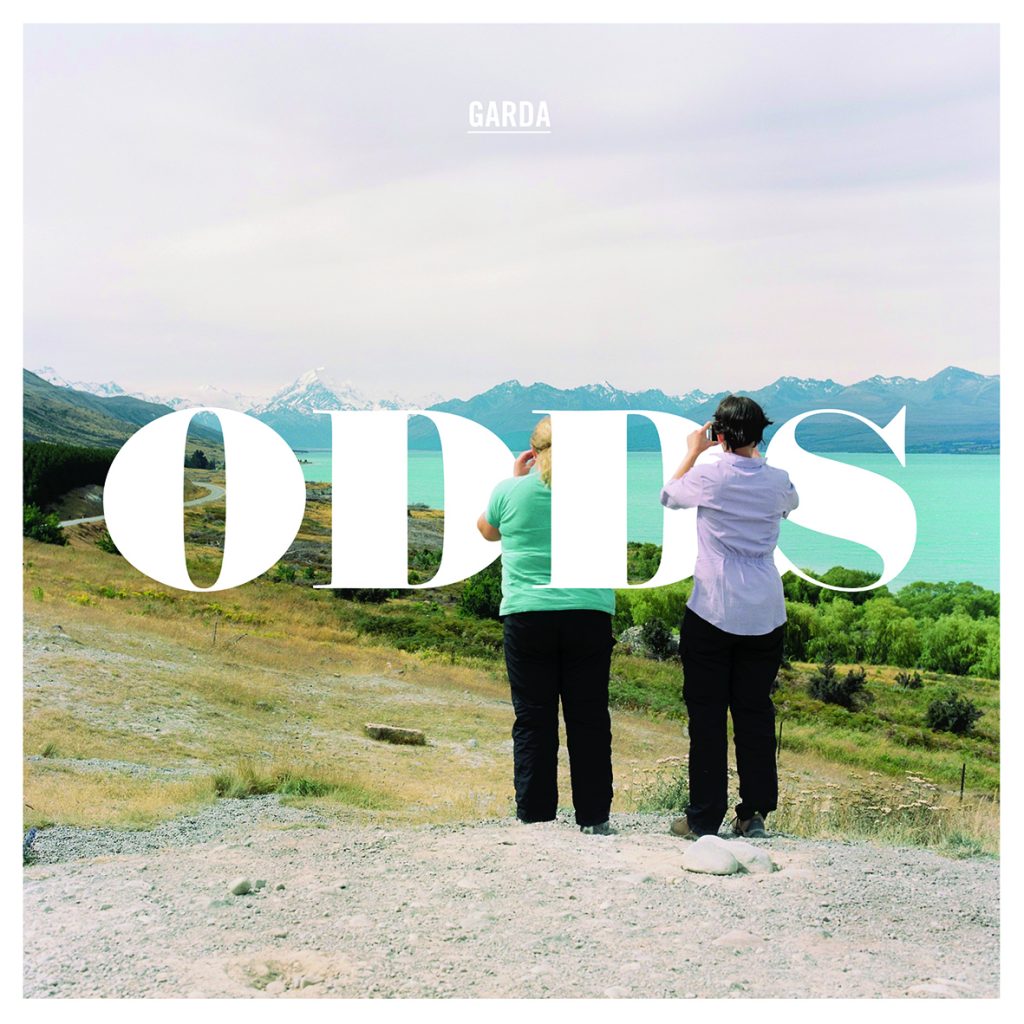
Odds

The music video for “Iron”, which is the first single of Garda’s new album “Odds”, gives us a glimpse through the eyes of the protagonist. We find ourselves stumbling through the woods, helpless and a little shaky, like a young fawn. As if in slow motion, the dense firs in the background fade away time and again. “Oh, it feels like nobody’s home / Yeah it feels like that, when your sorrows leave their hole”. Meanwhile, we duck ourselves under branches and pinecones, somehow in a trance but simultaneously aware of every step we take. Our eyes stare down at the ground. Our eyes gaze up in the sky. With “Iron” as a final song, Garda closes the album and somehow this is what this song is – closure – for a breakup, from a distance, sober and alone. The protagonist deals with it in a prosaic fashion. And yet, the song is so musically dense that there is a constant tension between its lyrical narrative and the instrumental complexity and underlying emotion.

The nine songs that make up “Odds” deal with apparent contrasts. Every time a song appears to be tangible, it dissolves right in front of you. Rearing instrumentals follow slow, viscous moments. The songs soar, again and again, with the help of uncommonly dense sound structures, so that they eventually become orchestral entities fueled by string players, wind instruments, vibraphone, pedal steel guitar and percussion, and then they eventually collapse. Garda, essentially a sixpiece from eastern Germany around singer and songwriter Kai Lehmann,always embraced a very open and collaborative form of up to 11 musicians on stage at a time. Even more so in the studio.

„Odds“ wasn’t an easy album to make. The countless concerts for its predecessors “Die, Technique, Die!“ (2008) and „A Heart of Pro“ (2012) had taken them all across Europe, playing festivals such as Maifeld Derby, Orange Blossom Special, Eurosonic, and the Communion Nights in London, as well as a 10-day-tour through Japan for their Japanese label Moorworks.

The new record then took about four years in the studio – experimenting, reworking, looking for an unused aesthetic. It rises above the band’s original folk context, condensing into complex formations, densely woven and majestic. Surprisingly straying into catchy pop territory at times, then skittering off into a raw and rugged energy. The dynamics and the force behind their live shows have been captured in these recordings at Hotel Albert Studios and the mastering of Doug van Sloun(Omaha/Nebraska, Bright Eyes, Cursive,…). Production by Uwe Pasora and mixing by Jörg Siegeler at Kanal 24 lend the final record a very forward looking and international sound, whereas, once again, friends and relatives such as the string quartet „Ensemble Tanderas“ as well as members of the traditional Ore Mountains brass band “Oederaner Blasmusikanten” make an appearance.

While listening to “Odds” one can get the feeling of going deeper and deeper into the woods, mighty trees and pines protrude into the sky. There are so many trees that the new canopy of the forest becomes the sky itself. Our only steady companion is Lehmann’s voice with its emotional intensity so tremendous at times, it let’s these vast orchestral structures tumble and fall and so frail at others that it threatens to disappear. (Henrike Schröder)

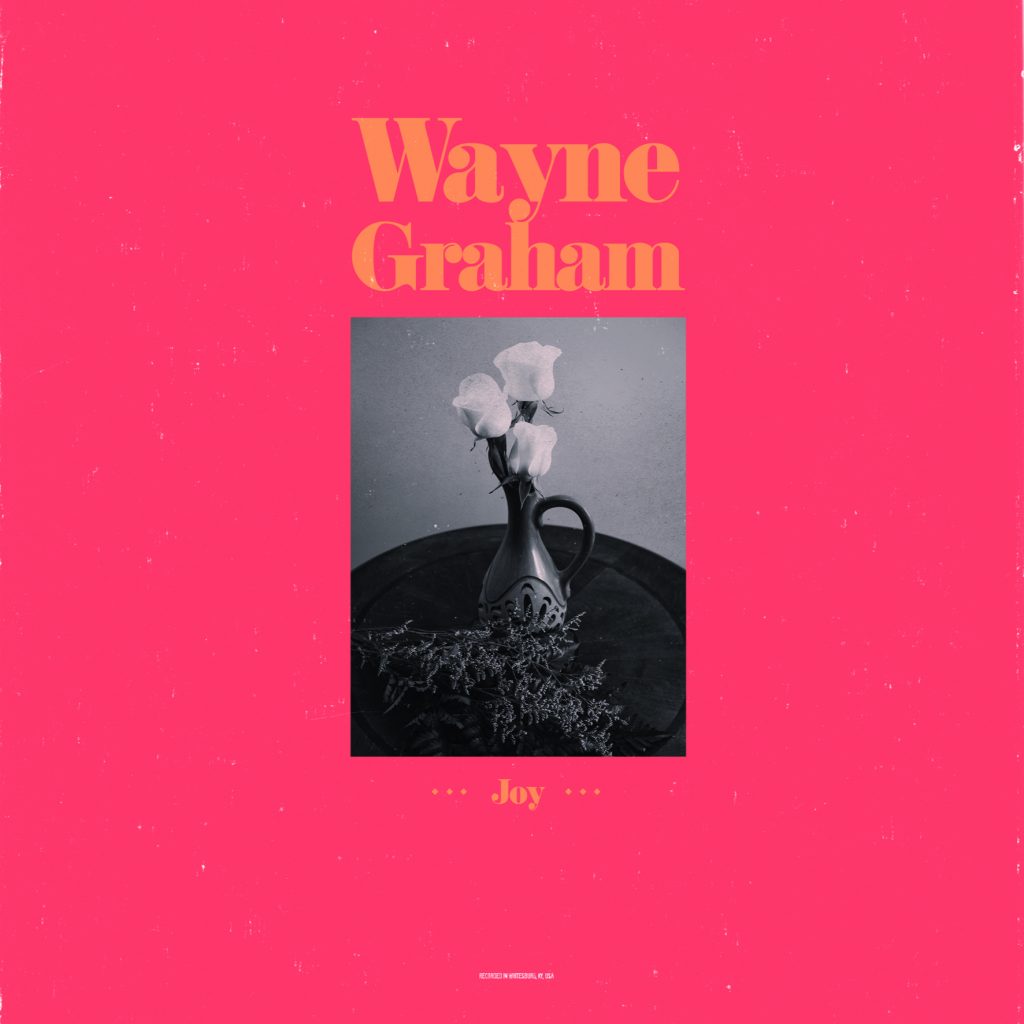
Joy!

Wayne Graham is a band of two brothers, Kenny and Hayden Miles, hailing from Whitesburg, a former coal mining town in South-East Kentucky. They released „Mexico“ in the fall of 2016. It was their fourth album, and the first one to be released in Europe. Its follow-up “Joy!” actually doesn’t require that many words. Everyone who has heard “Mexico” knows how amazing this band is. That „everyone“ in this case still amounts to way too few is obvious as well.

“…orchestrated traditionally humble and down to earth, however, written so smart, slender and tremendously well, that Wilco, Sparklehorse or the godfather himself Gram Parsons must serve as a comparison […] This is a mandatory recommendation. (INTRO 10/16)

“Modern Appalachian music at its best. A huge album that insists on careful appreciation.” Americana UK (9 out of 10)

  “ This Country-Sound is classical and progressive at the same time, one thing it is for sure: enticing.(Jan Freitag – Freitagsmedien)

“Joy!” directly connects to their last album. Both brothers write fantastic songs, sometimes literally over night. They are virtuoso musicians and clever engineers of their own music. Nevertheless, they make a point of maintaining a sober and very level-headed sound – earthy and dry, neither blurred nor bloated for mere effect. This doctrine might go back to their heroes. People like J.J. Cale, the late Don Williams (namesake of one of the album’s tracks), or John Prine, who inspired Kenny to become a mail-man before his career in music and before moving to Tennessee three years ago. Yet another reason for their sound’s sober decency may lie within their upbringing. The brothers were raised in a religious and very musical family. Their father had founded a church in their hometown and the two would back him in the services on bass and drums..

Nonetheless, they significantly expand their color palette on „Joy!“ The opener “On My Throne” comes off surprisingly bluesy and bitterly political. (“I’m better off than I deserve | I’m full of war but I never had to serve”) and the driving, lyrically enigmatic “White Rose”was a surprise. “Toyman” is their first instrumental piece and separates the album into two halves.

“Joy!” is the first album the brothers created while living apart (Whitesburg, KY, and Nashville, TN) and at the same time it’s their most collaborative one to date as far as completing one another’s sketches, lyrics and songwriting ideas go. It is also a transcontinental band-record since Johannes Till and Ludwig Bauer, two multi-instrumentalists from Dresden, Germany, have added guitar, keys and trumpet to several of the songs. Drummer Hayden Miles, actually contributes two songs, composed and sung by himself, which seem to leave the Alternative Country-terrain alltogether. „Here“ and „Don Williams“ are fragile, quiet Indie-Pop gems –  a tentative mapping of unforseen possibilities.

“Don Williams” is about rummaging through old inherited stacks of tapes left by their pawpaw Wayne (The band name is a combination of both their grandfather’s first names, by the way). On these tapes were sermons, bands he liked, players he admired, voices of friends and relatives, and  – on almost every other cassette – the eponymous Country-Songwriter.

“Here” gives off a vibe of walking through postapocalyptic small town America. No traces of the enormous sums of money to be found that once were earned there in the mining business. Junk and waste products of civilisation on front lawns, emptiness and rural exodus… “At the foot of a small town’s mountain | resting high above their eager eyes | black from the money that they’ve earned here | seeing no return while they get high”

Upon asking Kenny Miles about their approach to the new album, one gets an answer that bears resemblance to the songs on the record – understated yet never without any poetry:

I think the only boundaries that ended up being pushed were our vulnerabilities. It is a somewhat bare record, musically and lyrically. […] Although we don’t set out to give voice to an otherwise inexplicable aspect of being alive at this time in history, the songs end up serving that purpose for me. They are memos to myself for later, documenting what it felt like to persist and move forward.”

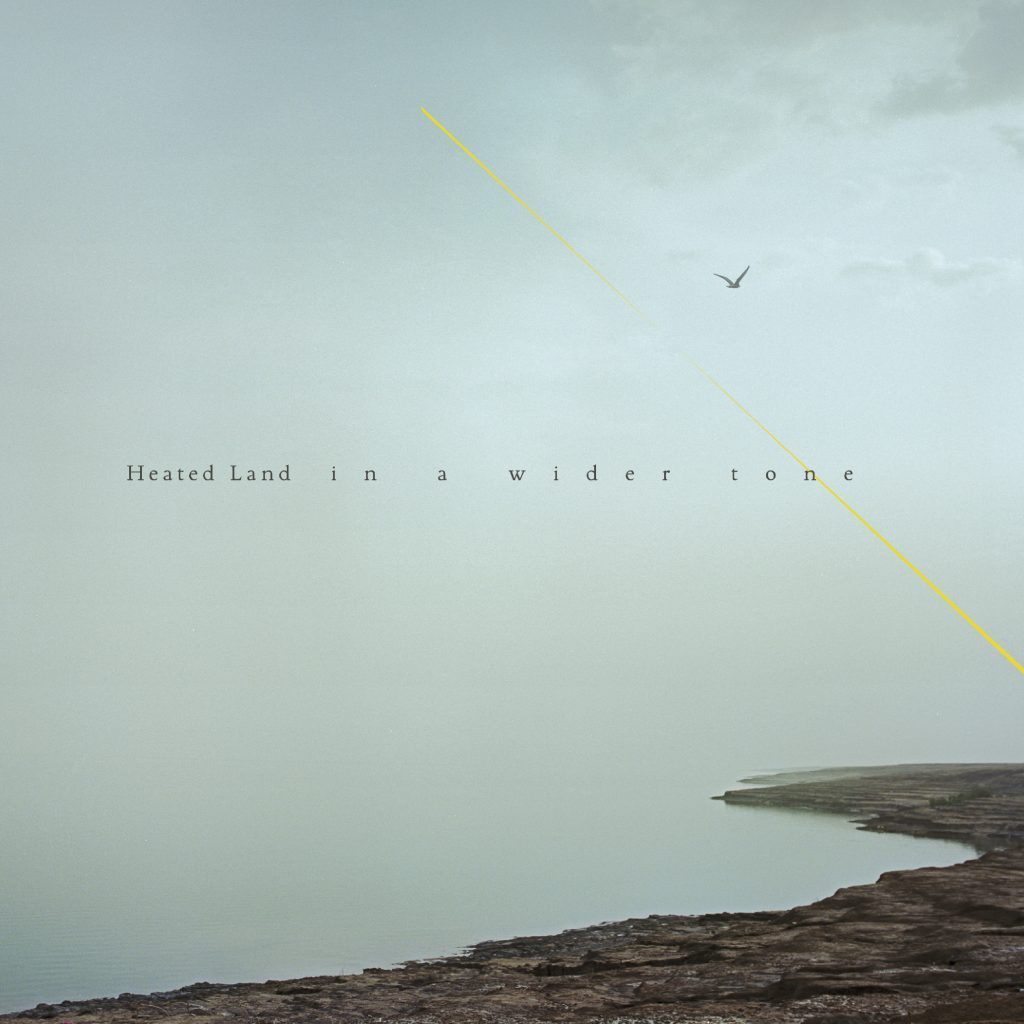
In A Wider Tone

After touring behind the self-titled debut “Heated Land”, Andreas Mayrock, the singer and songwriter of this relatively open band formation vanished from the face of the earth. From time to time postcards arrived from Cuba and Mexico but the farther he went up north, the sparser the signs of life became.

At some point, he sent the recording of a live-session somewhere in a log-cabin in Canada. Old and new songs, cover versions of Dylan, Van Zandt and Springsteen, songs as rough as the landscapes that must have surrounded him at the time. One day, out of the sudden, we ran into him in Dresden again, but he was already talking about a work visa that was still valid and gone he was again. He spent most of his time in Refuge Cove a tiny parish in British Columbia, Canada, on an island belonging to the Inside Passage, which stretches from the US West Coast up to Alaska.

Three years later, he checked in with us again, moved to Hamburg and was in quite a hurry all of the sudden. After some quick rehearsals in Dresden, the band, which had in the meantime scattered across Zurich, Berlin, Dresden and Hamburg, packed their things and drove up to Watt’n Sound Studios in the far North of Germany to record their new album.They microphoned everything and played music for two days and nights straight. Upon their return at two in the morning of day three, they had a new record. It is called “In A Wider Tone”. They might not be the most perfect recordings but there are songs on this album, that will wake you in the middle of the night with an urge to get up and listen to them right there and then. And they aren’t meant to congeal in their perfect form. They are created to be varied again and again in a live setting.

“The origin of all almost all of these songs is a meditative state”, says Mayrock. Nevertheless, meditative doesn’t seem to be the right word to describe the songs as it might imply they are only revolving within and around themselves. These songs are filled with longing and search, solitude and renewal, and stories of actual experiences, that could be stretched over the course of a long, long night. Densed down to only a few lines. And they get to a few existential truths.  “Off the Trees” or “12000 ft.” let you feel things that are extremely rare in popular music – something sublime which is way bigger than actual beauty. An insignificant I amidst the vastness of nature. Freedom and the lack of it… „You’re free and endless | and it doesn’t make a difference at all | whether you hide or seek“ (Off the Trees)

In comparison to their debut, only traces of the blues are left here. “In a Wider Tone” is folkier and warmer than their debut album. The blues harp of Alexandre de Ligonnès surfaces only a few times and if it does, it only billows distorted and abstract like dense black smoke over a burning house. Instead, he plays a hand-operated harmonium – a traditional instrument in hinduistic music. The drums of Christoph Dehne still sound like a Jazz drummer throttled by opiates. The unexpected warmth and lightness of the acoustic and resonator guitar play by Raja Ghraizi is completely new to Heated Land. The stoic double bass played by Simon Preuss is the glue which keeps the music together.

In British Columbia, Mayrock worked on a fish packer, as a harvest hand, and in sawing mills. He gutted ships and sunk them, he shredded trees and put out traps for gophers. And he sang for his supper from time to time. At least one of his employers would always jokingly demand that he did. And this is no wonder since his music is made for dropouts, austere self-sufficient persons, and all the endearing quirky characters which choose to live in the most sparsely populated areas of the world.

“In A Wider Tone” is critical with capitalism, skeptical on the topic of civilization, afar from technical revolution and somehow a bit apart from everything. It’s rugged and wide, like the landscapes the songs were written in and sometimes the songs do arise as beautiful as the snow-covered Sierra Nevada in the west of the death-valley. Everything starts with an overhasty departure (“0 0 0”) but it doesn’t end with a return. It stays out there somewhere in the wild.

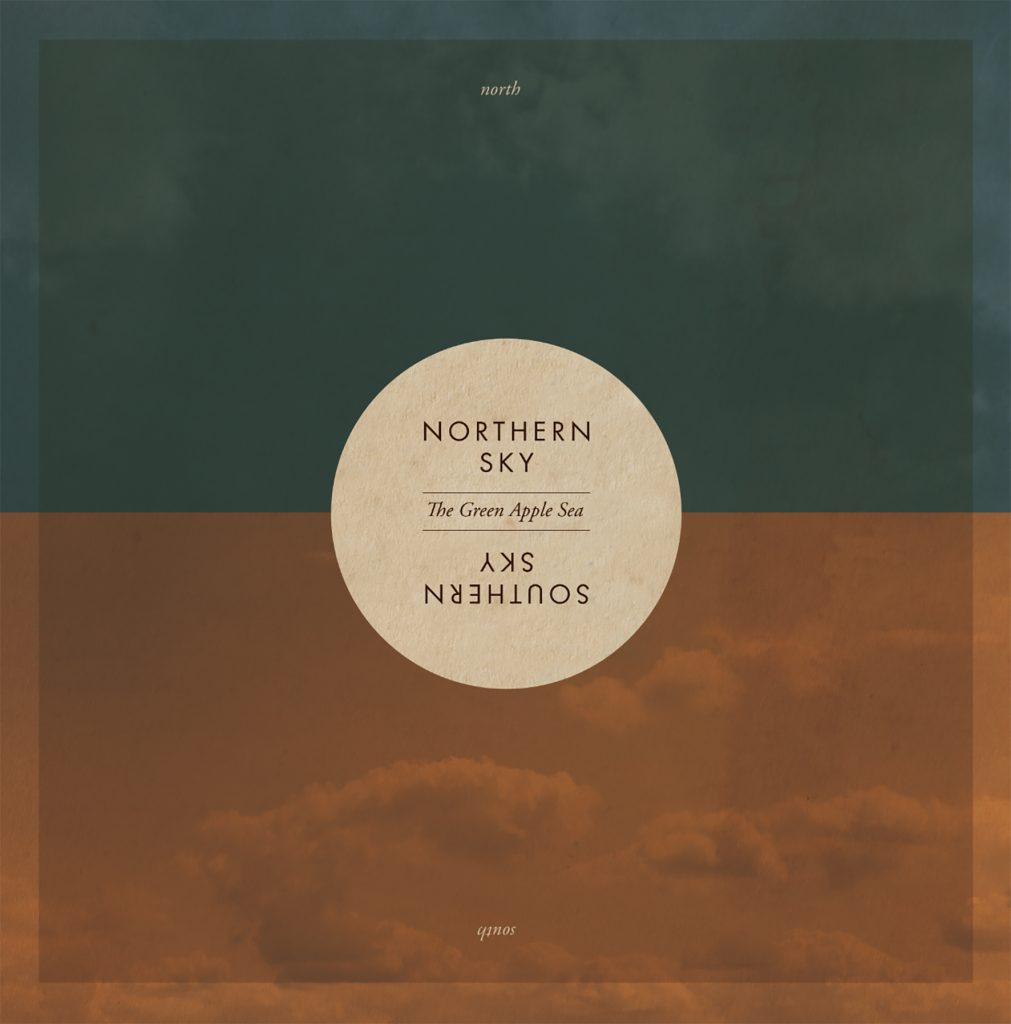
Northern Sky / Southern Sky

The bronkenness indicated by the album’s title and artwork is being explained by Stefan Prange, the singer and songwriter of The Green Apple Sea, on three different levels. It doesn’t only represent the two hemispheres, it also mirrors his origins in northern Germany and his southern home in Nuremberg and finally, it stands for a general high and low. Many of these songs originated in a six-month trip through Argentina, in bad news being sent back and forth between the two hemispheres and in the mourning in one place over someone at the other end of the world. Musically these dichotomies are being resolved in a songwriting as clear and beautiful as a mountain lake. The Green Apple Sea, “state-of-the-art folk- and country-influenced Indiepop in Germany” (INTRO magazine), deliver ten variations of the perfect pop song. The defining element of the album’s sound are complex vocal harmonies, soaring into graceful chorales and strewing countless beautiful melodies into these songs. Another important constituent is the subtle and subversive drumming. There isn’t any consistent drumming that accompanies these songs but intricate patterns, created by two drummers, swelling an ebbing inside of them. The result knits the harmonies of fully depressed Beach Boys to the tender arrangements of Nick Drake and to the compositional brilliance of Wilco – a decountrified folk music, reminiscent of the early British and American folk-pop songs à la Chad & Jeremy of the 1950s and 60s.   Lars Hiller

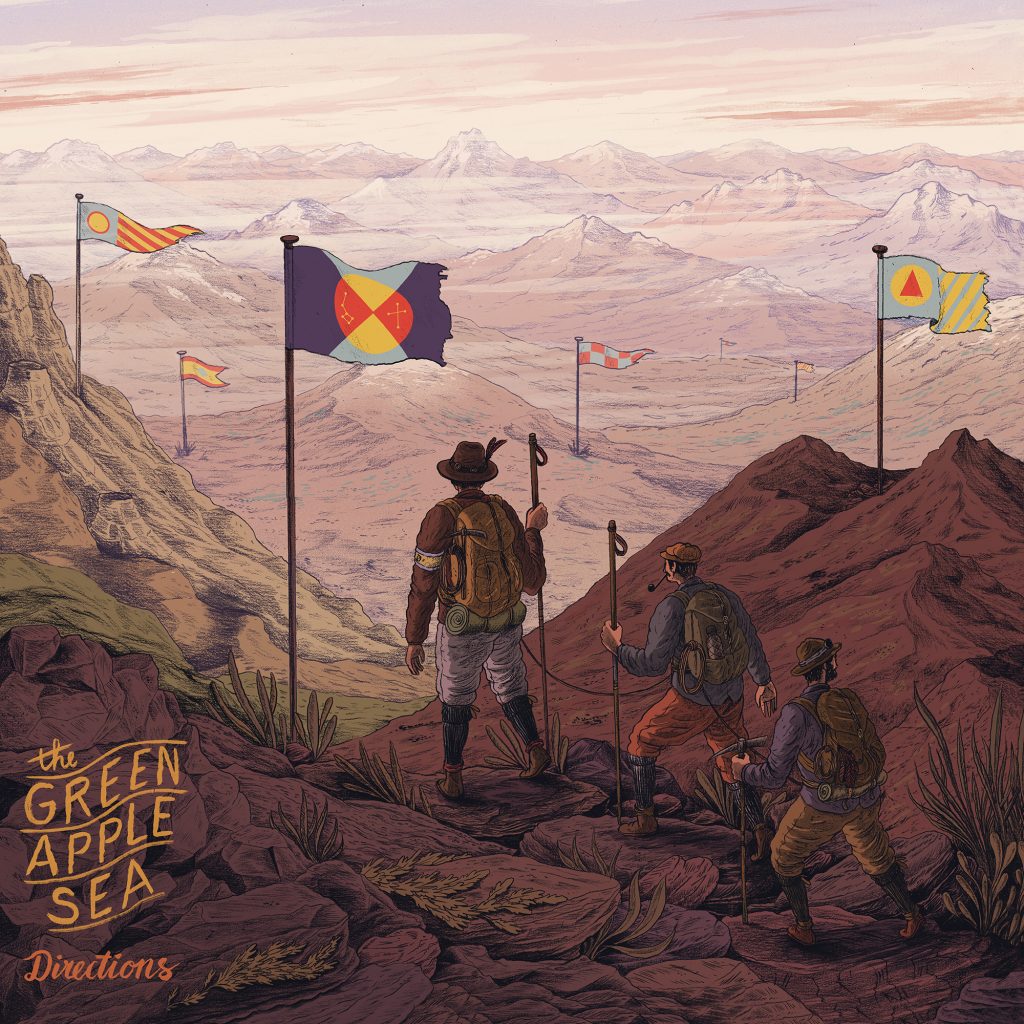
Directions

About eight years ago Stefan Prange, creative head and songwriter of The Green Apple Sea from Nuremberg, decided to move to the countryside out of despise for the mechanisms of modern day life. He slowly said his farewells to the Indie music scene, planted potatoes instead and trained the local kids football team.

He didn’t want to be a musician anymore, songwriting was not an option either. He was sure, he never wanted to play live again. His home was his castle. The only problem: his songs didn’t think much of that. They kept coming and somehow even seemed alright at first glance. Hence, Prange began singing them into his phone, in secret of course, and scribbling down lyrics on electricity bills. His former bandmates, to whom he eventually slipped his new ideas, were as enthusiastic about the new songs as he was. So step by step Stefan Prange said goodbye to his football coach job and instead of growing potatoes, he entered Open-Mic nights on Sundays, to test the new songs in front of an audience. Subsequently he travelled to London to play a Communion Records Clubnight and a Daytrotter Session – things that laid beyond his wildest dreams. Shortly after, the band went into the studio and began recording a new album. It took them four years. It is here now and goes by the name “Directions”.

The recording of “Directions” was more difficult than any of its predecessors for The Green Apple Sea. They wanted to create something really good after Pranges long creative break and their last record “Northern Sky/Southern Sky” (2010), which had received rave reviews upon release. Everything took longer than planned. Years and years and years.

What remains is the organic band sound which is so typical for The Green Apple Sea. Everything is intertwined and yet, every instrument and every melody has its place and remains distinguishable. Choirs and harmonies stay one of their trademarks and almost every song starts with a signature melody, most of them played by producer Chrisitan “Wuschi” Ebert on keyboard or piano. Melody as the basic ingredient of songwriting. The song starts and everyone immediately knows which band is on.

Like almost no other band The Green Apple Sea know how to connect melancholy and bitterness with sparkling, country influenced pop songs. However, it is not only the inherent contradiction, the splendid contrast between lyrics and music, which makes this band so extraordinary. It’s also the songs. These handcut, finely crafted songwriting prototypes. If anyone should ever ask what songwriting is about, just play them any random title by The Green Apple Sea. This should answer the question. Each and every song on “Directions” has got such a disarming radiance it seems crystal clear why it took them eight years to come up with them. It feels as if they are going back to the term ‘album’ in it’s original sense with “Directions” – a collection of singles. This is not a album on which songs depend on one another, they don’t require the context or the neighbourhood. Each and every one deserves the limelight.