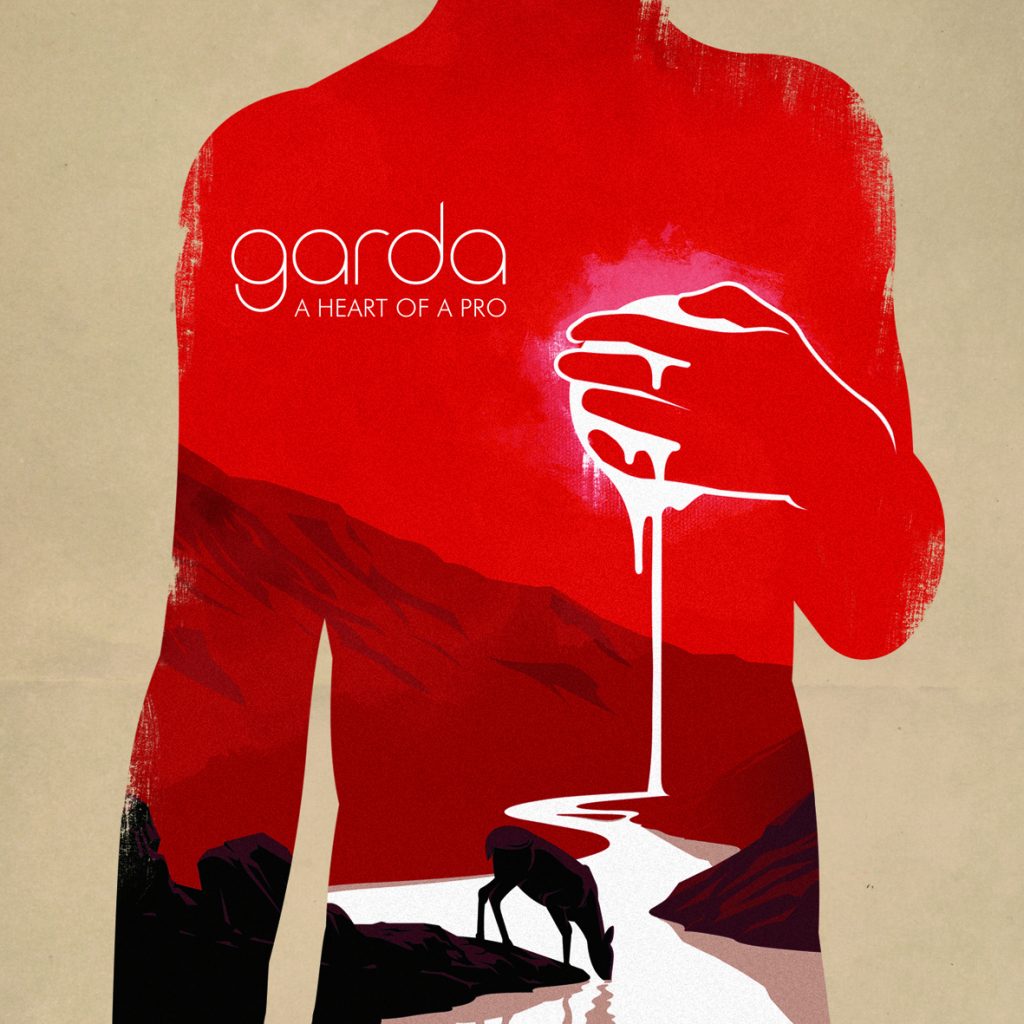
A Heart Of A Pro

Garda from Dresden, Germany, have created a record of astonishing beauty and musical intricacy around a feeling of being „caught in the undertow of mistakes“, as the title track puts it. “A Heart Of A Pro” rises above the band’s original indie folk context, condensing their music into complex formations, densely woven and majestic.

Mastered by Doug van Sloun (Omaha/Nebraska, Bright Eyes, Cursive,…).

Big Empty

Coloradas formed in 2011, as two songwriters and a handful of virtuosic bluegrass musicians, trying to create something meaningful in a gone-but-not-forgotten little apartment in Portland, Maine. The result was their self-titled debut, a collection of end-of-the-world bluegrass stomps and sad country ballads. Shortly after its release in the US, Germany-based label Hometown Caravan put it out on vinyl in Europe, and sent the band on two tours in Germany. They haven’t stopped performing, writing, and recording since.

Big Empty is the newest recording, to be released on October 22nd, the year 2013. It often sounds like the blues. It sometimes sounds like country music, back when country music sounded like itself. There are moments of mountain bluegrass, dark folk, and old time. The songs are written and earnestly delivered, re-interpreted as folk music, complete with fingerpicked guitars, clawhammer banjo, and soulful mandolin. There’s a pentecostal junkyard man, a soldier with a drinking problem, and a handful of first-person narratives.

The Coloradas currently tour the US in a 1986 Toyota Motorhome playing performing arts spaces, roots music festivals, house concerts, and other listening-based venues. They also travel to Europe several times a year. The live show is an experiment in finding common ground between American roots genres with improvisation and creativity, while staying true to their basic source of inspiration: the songs.

Roy Davis (songs, vocals, acoustic guitars) currently splits his time between Maine and his home away from home on the Bodensee in Austria. For the Coloradas, he wears the hat of audio engineer, manager, graphic designer, documentarian, and motorhome mechanic. He also travels as a solo performer.

Bernie Nye (songs, vocals, banjo, acoustic guitar, harmonica) lives in Maine with his lady and their cat Dinah. When not performing with The Coloradas, he works on a farm.

Joe Walsh (mandolin) is a guest performer with the band, appearing whenever and wherever they are lucky enough to have him. Caveat: going to a Coloradas show does not guarantee that you will see Joe Walsh play the mandolin..

Self Titled

HEATED LAND is a songwriter album that stands raw and stoic in this usually rather sensitive genre. One could almost say it is archaic. The only valid coordinates of this album lie between Howlin’ Wolf, Little Walter und Son House on the one side and Bob Dylan, Townes van Zandt and JJ Cale on the other. HEATED LAND draws inspiration almost exclusively from old blues records and creates, in the mimicry of a folk- and songwriter album, something that could be described as pop song-miniatures with an avantgarde edge. This is an approach that is pretty much unique in the songwriting-landscape. None of the songs stay limited to blues. The songs surprisingly twist and turn their way out of its repetitive schemata and established tonality, for instance in “The More We Ride On” when a refrain peels out of the unwieldy African finger picking that makes you want to nod and sing along. Or when the extremely groovy “Indian Temper” overwinds in a perfect pop moment. Inside of an abandoned signal man booth on a depopulated suburban train station, HEATED LAND lined up microphones and recorded, except for a few backing vocals and the pedal steel in “Smash Glass”, the entire album live within only a few days. An approach which couldn’t fit any better in the blues tradition, within which the band locates itself. There is an openness for improvisation and for the uniqueness which every song develops potentially every time it is performed. Accordingly, the results are ruggedly and sparse, just like the surroundings in which the album was recorded. A sometimes cutting, sometimes floating and sometimes groovy snapshot of highly sophisticated songs. Andreas Mayrock, the singer and songwriter in HEATED LAND, is from Augsburg, Bavaria. He is a minimalist who achieves big results. He drills intuitively into the songs, finds wonderfully abstract rhythms and finger pickings without getting lost in them and he writes lines that will get stuck in one’s memory like endless reverberations. Lines like ‘We’re all trying the impossible move of leaving it all behind’ (One For The Road). And he performs them with Bill Callahan’s stoicism and the certainty of a radio evangelist. The songs on the album owe their final form to the circumstance that Mayrock, after years of solitary musicmaking, found a band consisting of great, precise musicians who could give the music the final touch it needed. The way how René Stürmer, who comes from a Jazz-background, plays the contrabass, the minimalistic and abstract drumming of Christoph Dehne and of course the intuitive, blues-infected harmonica of Mayrock’s longtime companion Alexandre de Ligonnès. “To Ronda” is the sole remnant of earlier recording sessions for HEATED LAND. Maybe because it follows the same ideals of a live and pure snapshot in the recording process. Three people in one room. A softly scratching violin ascends in astounding beauty from a pile of shards of a harmonica and carefully feels its way forward in the finger pickings of a guitar: ‘Pearls they don´t swim at the surface, Ronda / They are locked inside bloody cases / You got to dive down with your flashlights on’ (To Ronda). 

Workingman’s Lurch

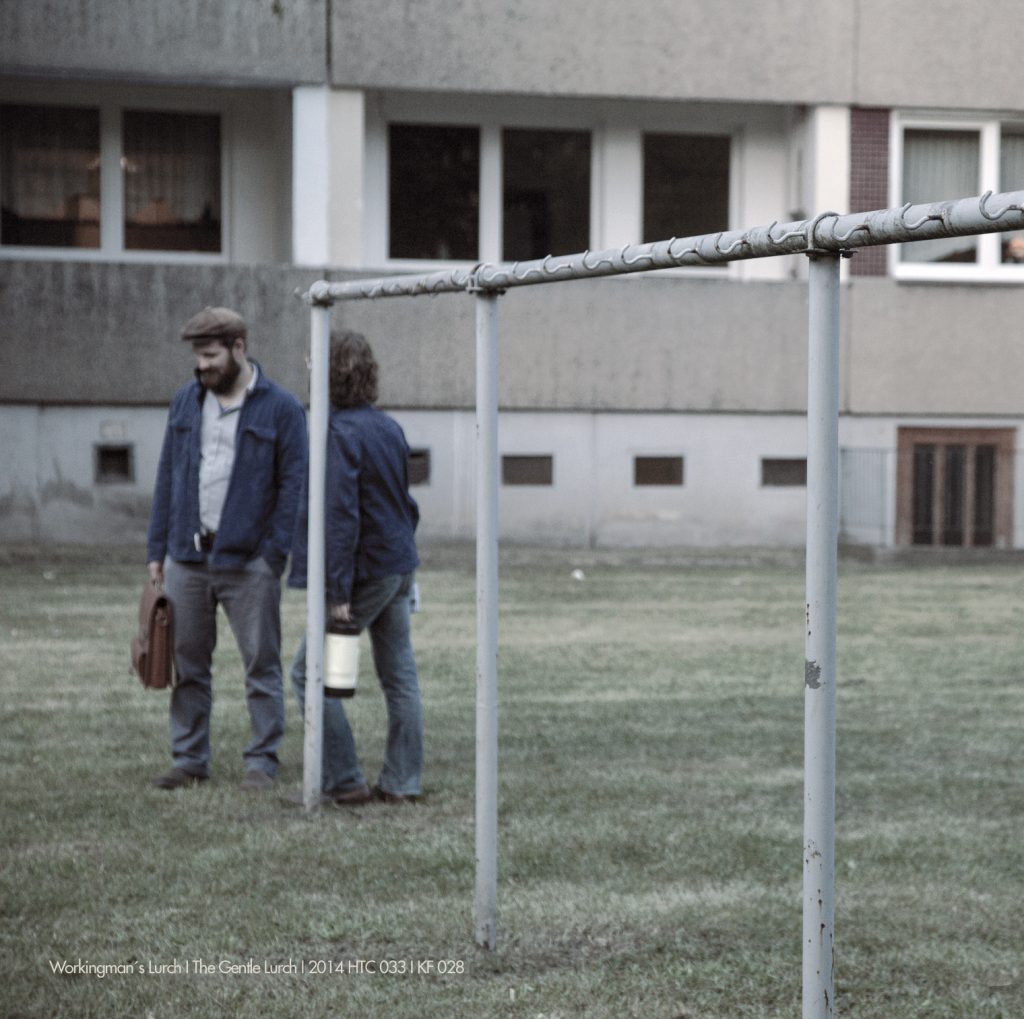
We are passing our days / Like two snails / Slowly crawling past each other / A shared office, alright / But aren’t we supposed to be brothers?” (Workingman’s Lurch) Workingman’s Lurch, just as the title track suggests, is a pessimistic album that deals with work. Going to work, being at work, stagnation, approximating death.

It’s the third album by a band from Dresden, Germany, called The Gentle Lurch. Its members hail from the rural Ore Mountain region nearby. They like to pause in between albums until each and everyone has forgotten about their existence. Their last (double-) album stems from 2009 and Americana-UK spoke of “Dresden‘s Answer to Wilco – a sprawling, experimental epic…” with regards to it back then. Rolling Stone Germany compared them to Lambchop and Tindersticks.  

Since then, the three core members and singers Cornelia Mothes on piano, Frank Heim and Lars Hiller on various string instruments were joined by Ronny Wunderwald on drums and Timo Lippold on bass. Possibly as a consequence, the band has been overheard speaking of Workingman’s Lurch as an “honest-to-God rock record” which, most likely, is an indication of their skewed self-perception. It’s the opposite of a perfectly rounded offering. Each song has got its own will, develops its own strategy and momentum. Ludwig Bauer has written two harrowingly beautiful string arrangements and, from time to time, an obscure ‘Choir of Mothers’ expands the polyphony of voices of the band’s three lead singers. 

Yet, drums and bass provide a much firmer framework for this new set of songs. They let them become more concise and, at times, louder than on previous albums. ‘Our Bodies Become The Ground‘ rolls like scree avalange from the speakers. Also, Cornelia Mothes takes up much more room on this record, confronting Lars Hiller’s stoic sing-song manner of recitation with a comforting, almost redemptive element. She also brings a previously unfound directness and pop-affinity to this record. Therebeside, plenty of remnants of the old Gentle Lurch remain: close to standstill, precariously groping, a sound like rotten wood. 

Their songs are lyric-heavy and narrative. The lyrics like to twist and turn to mystery like the closing observation of a short story by Flannery O’Connor. It’s difficult to call them a folk band, but it’s also difficult to call their output experimental music. There are only three choruses on the whole album. Most tracks are like journeys from point A to point B, others level and rise like waves on an ocean. They use elements of Folk, Country and Americana, because they like their emotional directness. But they realign them into something different. At times, as confrontational as on ‘All Things Come’ which tilts from complaint over into consolation on a single organ note, changing singers as well as harmonies mid-song. There is the strangely rotating chord progression that propels ‘Cannot’, or the groove torpedoing the gospel of ‘On How To Tamp Leaks‘.

Workingman’s Lurch also marks the first time, the band has worked with an external producer. Johannes Gerstengarbe usually stands for a more polished, radio-friendly production style. It was a conscious decision to combine the band’s crude approach with his aesthetics. Mastering was done at Soundcurrent in Knoxville, Tennessee.

The almost two years of recording took place in an abandoned, former chocolate factory surrounded by old GDR-housing projects depicted in the albums artwork and which – apart from a few early 90ies satellite dishes – appear to have gone untouched by the German unity and the Quarter century that has passed.   

Then of course, the album’s title is also a distant echo to Workingman’s Dead by Grateful Dead (1970). Whereas that record could be viewed as a swansong of the innocence and cultural liberation of the 1960ies, Workingsman’s Lurch is the swansong of an unaffected,  self-sufficient life. It doesn’t describe a cultural phenomenon but a biographical one: integration into employment, the groan of material, the deadlock, the grind and creak, the repulsion of nonfunctional parts. „There was something that sat on my heart like a moth.” (Nesting)
Five Years Diary

When Indiana natives Curtis Mead, David Moore, Adam Rubenstein, Charles Walker and Clay Snyder released Fate’s Got a Driver under the Chamberlain moniker in 1996, they established a solid fan following in the United States and Europe. Regarded as an emocore classic, this album continues to draw new fans to Chamberlain’s music more than six years after its initial release. Influenced and shaped in the early 1990s by punk’s aggressive intimacy, this band emerged to become what CMJ New Music Monthly magazine called the authentic interpreters of Heartland rock ‘n’ roll.


Chamberlain crafted a unique sound that powers an impassioned and emotionally authentic musical experience by fusing classic rock tempos with emo sensibilities. Conspicuous throughout the Chamberlain discography is the prominence of melody and the pure lyrical conviction that infuses the music.


Intelligent lyrics, memorable melodies, stunning vocals, instrumental prowess and an engaging, unaffected stage presence captivated club and campus audiences across the country as Chamberlain toured aggressively behind the October 1998 release of their sophomore album, The Moon My Saddle. CMJ New Music Monthly called this album astounding in its presentation of the striking progression that Chamberlain’s music had undergone between their first and second albums.


Fans were intriqued and eagerly awaited Chamberlain’s third album. Once again, the band demonstrated its versatility with the release of Exit 263, a thematic compilation of 12 roots/blues/alt-country songs recorded by the final Chamberlain line-up: David Moore, Adam Rubenstein, Seth Greathouse and Wade Parish. The album was dubbed a near perfect effort by CMJ New Music Monthly and positioned at the top of the magazine’s Best New Music feature (April 2001).


Chamberlain’s musical journey has now been logged on a new double-disc album entitled, Five-Year Diary / 1996-2000. This retrospective release presents the awesome range of the band’s rapid but amazingly coherent progression from its post-hardcore/emo beginnings to its roots rock finale. The album’s 28 tracks clearly reflect the ever-present influence of Chamberlain’s early emo sensibilities, as well as the maturity and sophistication that consistently marked their music.

self titled

For the uninitiated, Drag the River are self described as a “Country & Midwestern” band. Transplanted from Missouri, the band resides in Colorado comprising of the talents of Chad Price (of ALL), Jon Snodgrass (of Armchair Martian, Scorpios), JJ Nobody (of NOBODYS) & Dave Barker (of Pinhead Circus). Drag The River began in 1996, when Chad was playing in ALL and Jon was rocking in Armchair Martian. The two wanted an outlet for the more laid-back, country-influenced songs they were both writing. They are one of those bands that manage to transcend the confines and boundaries of the musical world and become more like a legend. There’s something about their haunting croon and fuzzed-out Telecasters that make everything fit together so perfectly, hitting that same elusive mix of rock n’ roll and alt-country that The Replacements defined and so many others have tried to cop.

Die, Technique, Die

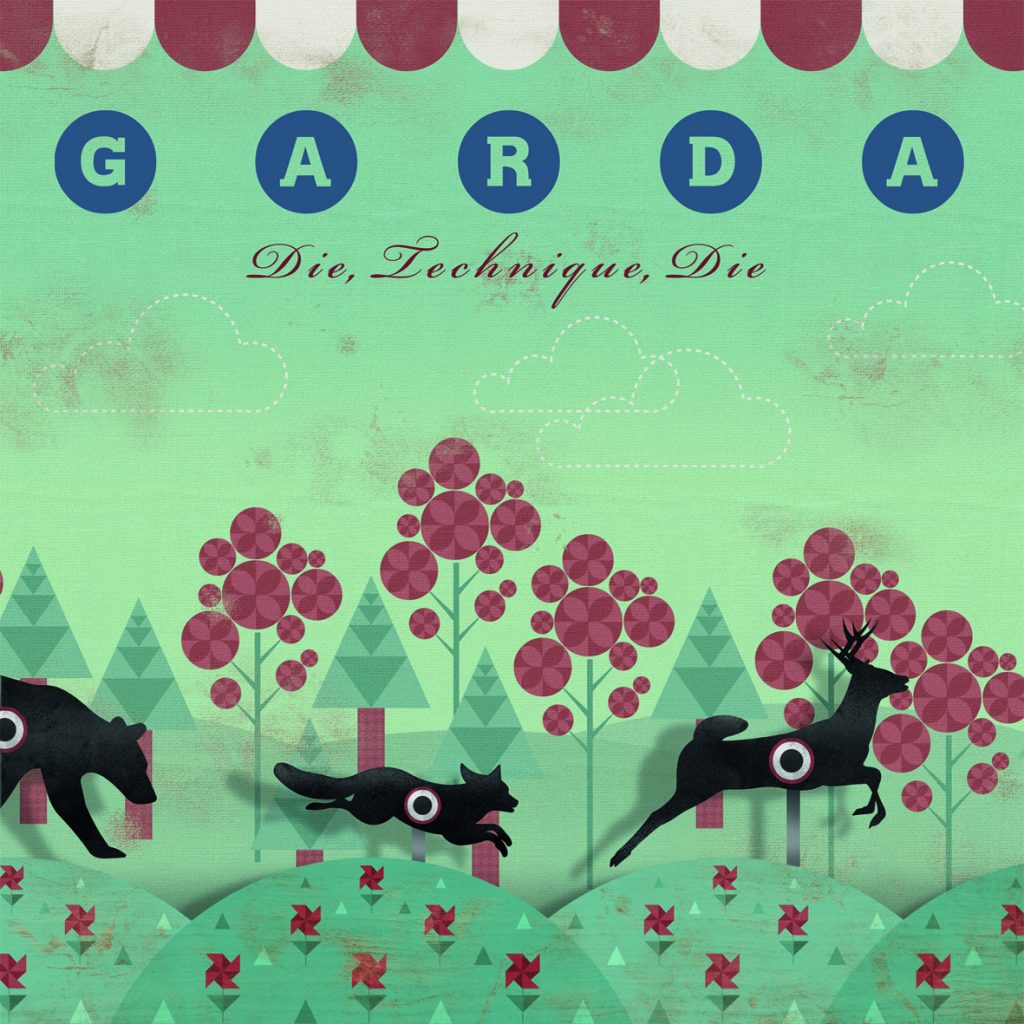
A guitar, a drum set, two young gentlemen who were brought up in the Ore Mountains of Eastern Germany. But Garda isn’t a two-piece, it is an idea. One person writes the songs and an open collective of friends writes arrangements for them. Strange chords, always sounding as if something is breaking inside of them, straight beats and lucid structures often enlarged with piano, organ, clarinet, additional guitars, cello, tenor horn and trumpet, played by numerous befriended musicians with an outstanding feeling for atmosphere and melodies.

Limited vinyl edition of their first album.

Frame By Frame

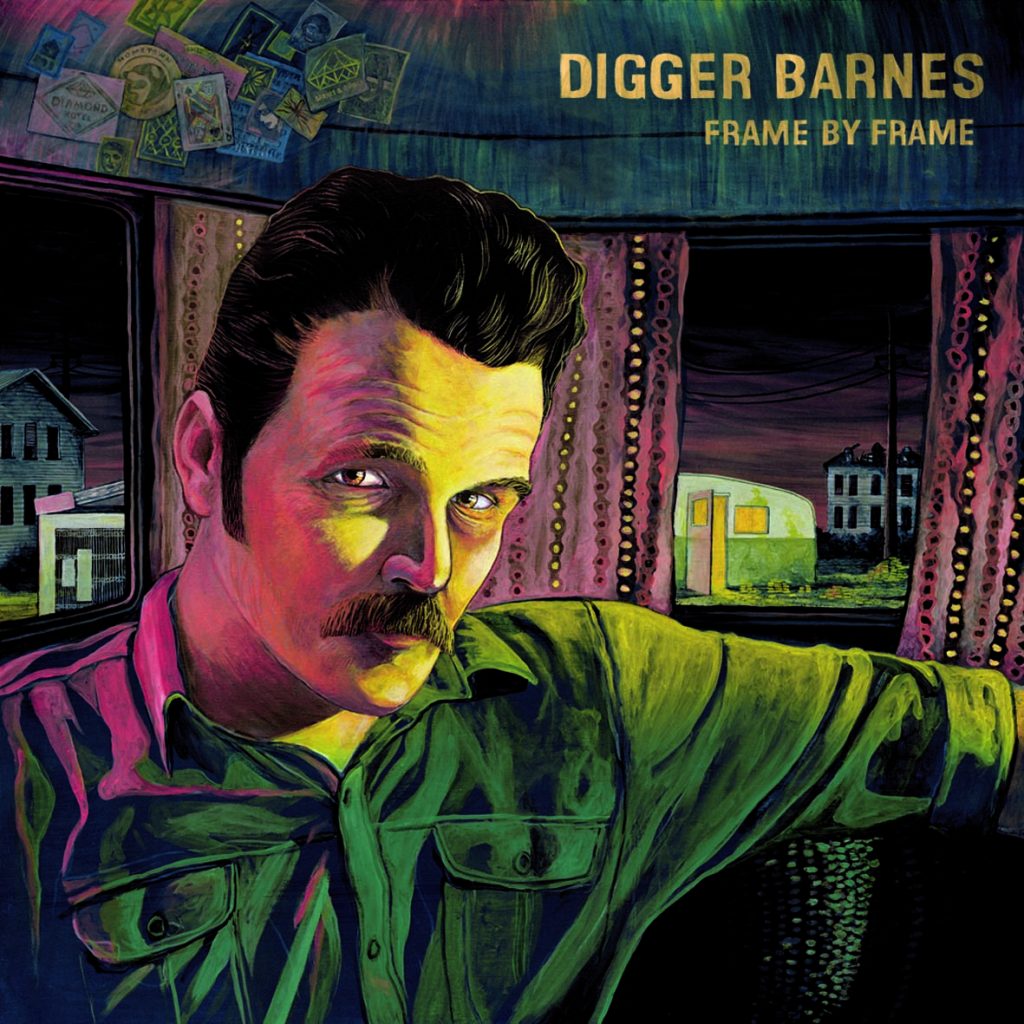
Digger Barnes meldet sich zurück mit 10 neuen Tracks. “Frame By Frame” ist das bereits dritte Studioalbum des in Deutschland lebenden Songwriters, der stoisch an seinem ganz eigenen Amerikanischen Traum arbeitet.

Thematisch dreht sich mal wieder alles um das Leben on the road. “Wir waren diesmal mit kleiner Live-Besetzung im Studio und haben versucht, uns bei der Produktion auf das Nötigste zu beschränken. Diese Entscheidung schien mir und Produzent Friedrich Paravicini nach den letzten beiden Alben der logische Schritt zu sein.”, sagt Barnes dazu.” Das Ziel war es, ein zeitloses Americana Album mit vielen Facetten aufzunehmen, den Songs zu vertrauen und ihnen Luft zum Atmen zu lassen”.

Zur Rhytmussektion aus Kontrabass, Besenschlagzeug und Akustikgitarre gesellen sich sparsam eingesetzte Instrumente wie Vibraphon, Orgel, Geige und Pedal Steel. Ein paar Klaviertupfer hier, ein Banjo dort, das reicht, um die Geschichten von Digger Barnes zum Leben zu erwecken.

Folk- und Country-Wurzeln sind die Grundlage vieler Stücke, doch gibt es auch Ausflüge in staubige Jazzkeller (“15 Years”) und abgeranzte Autokinos (“A Million Miles”). Der lässig groovende Opener des Albums, “What Will We Do”, versteht sich als Ode an die Zeit, in der Barnes noch als Bassist von Chuck Ragan, Austin Lucas und der Revival Tour rund um die Welt tingelte. Auch sonst bietet “Frame By Frame” Einblicke in das rastlose Leben eines Musikers, der sich nicht um Trends schert, und unbeirrt seinen Weg geht.

Der melancholische Unterton des Albums hält sich mit verschmitzten Gassenhauern wie “Keep On Rollin´” und “Dangerous Man” die Waage. “Oil-Stained Hank” ist das Portrait eines Autoschraubers, das mehr über die Wertvorstellungen des Digger Barnes verrät als tausend Worte. Und wenn´s dann doch mal nicht so gut läuft, reagiert man halt mit einem Achselzucken und macht weiter, denn: “The winner and the loser are twins”.

Im Zentrum der einzelnen Songs steht immer wieder Barnes´ warme Erzählerstimme, die reifer und relaxter klingt als je zuvor. In der Australierin Emily Barker hat sich eine ebenbürtige Duettpartnerin für die Ballade “Two Ringing Ears” gefunden. Die in England lebende Songwriterin, die bereits durch das Titelstück “Nostalgia” der Serie “Wallander” auf sich aufmerksam machte, ist auch sonst auf dem Album vertreten und verhilft mit ihrer Stimme vielen Refrains zu voller Pracht.